= the artistic genius of a physicist
At first glance, the notion of a physicist wrestling with the properties of light may seem more distant from the world of philosophy and art than ever possible.
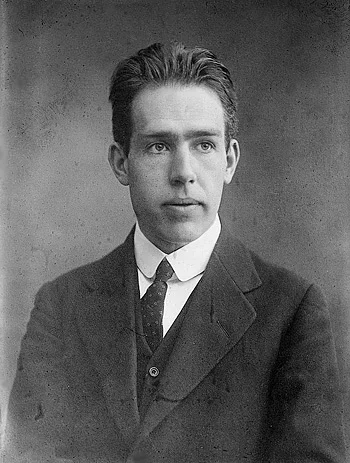
Niels Bohr, however, stood apart. In the early part of the 20th century, Bohr was developing a principle of complementarity while grappling with the unpredictable nature of light and quantum mechanics. In doing so, ideas from the humanities would mirror his approach. And some of these discoveries and thoughts would transcend beyond just physics into the world of philosophical and artistic thinking.
His principle of complementarity states that two concepts, both seemingly different, could also be mutually complementary. What it means is that an experiment that clearly illustrates one part of nature could simultaneously obscure another complementing view. The properties of light, which Bohr was involved with, offered a good example. The theory held that light could be described as both a wave and a particle, but our measurements of it could reveal only one, a wave for example, while obscuring the other, a particle. His principle implied that while gaining certain information from a particular observation, other, equally relevant information might simultaneously be overlooked. Light was described through both elements, yet we could only measure or witness one at a time. This principle suggested profound philosophical possibilities. It highlighted how many of our perceptions of the world remain could remain unseen, often overridden by what we immediately see. These ways of thinking resonated so deeply that when Bohr was bestowed the Danish Order of the Elephant, he chose the symbol of yin-yang as his coat of arms. Inscribed on the crest is the motto Contraria Sunt Complementa, which means "opposites are complementary.” It was this type thinking that made Bohr a visionary and beloved physicist. His willingness to consider this dual nature not as a contradiction but as two sides of the same coin, with only one revealing itself at a time.
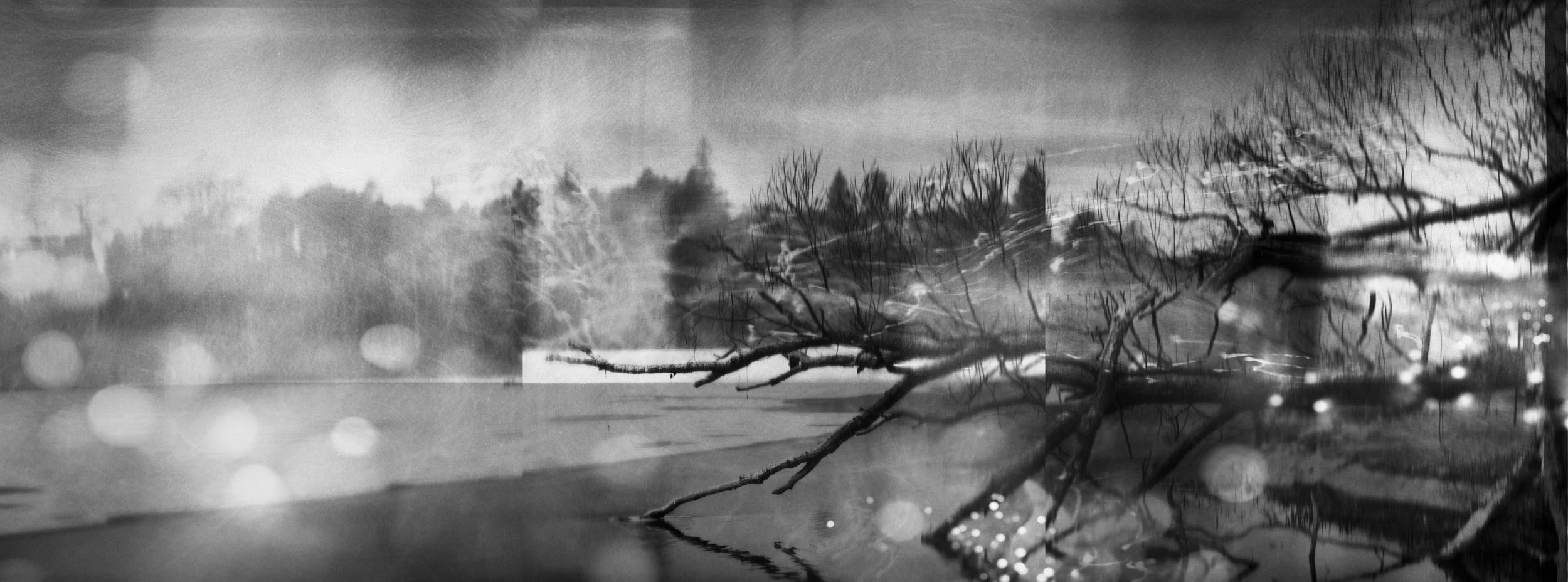
What made him endearing to the works here was his insistence that the language with which we describe things is as important as the physical properties we perceive of them. What we choose to see does not supplant what can be still understood. When we take one view as a complete reality, we risk dismissing what still remains unseen from that view. What we acknowledge may be real, yet our understanding remains incomplete if we dismiss what other perspectives can still reveal. The danger lies in taking one portion of a view as being the whole. And the idea of a work of art, at its best, explores this very principle. And it’s always tied to the pressures and spirits of its times.
Many physicists of the early 20th century were equally grappling with how our descriptions apply to observations, and Bohr felt no exception to this. He realized that what we choose to see is always related to us as viewers and the subjects we perceive — not merely one or the other — but as languages that are interwoven into what we see. Bohr’s perspective endeared him to many of his students and colleagues as well, maintaining collaborative and mentoring relationships with them — many of whom became great physicists and thinkers as well. This playful, curious approach was often interdisciplinary, applying not just to physics but to writing, philosophy, and the understanding of ourselves. Through the nature of complements, he left a kind of opening into the philosophical nature of science and art that can serve as an inspiring model for many of our own living worldviews. It remains a type of backbone to surrendering to Other models of thought and perception.